Devil’s Gold
Before dawn, the crater of Kawah Ijen glows blue. Sulfuric gas ignites as it leaves the earth, and electric flames run down the rock like water. It is one of the few places on the planet where this happens. It is also a workplace.
First light over the pipes, the lake still asleep
The miners climb into the caldera with cloth pressed against their teeth. At the bottom, ceramic pipes lead the gas out of the mountain; the sulfur condenses, hardens, and is broken loose by hand.
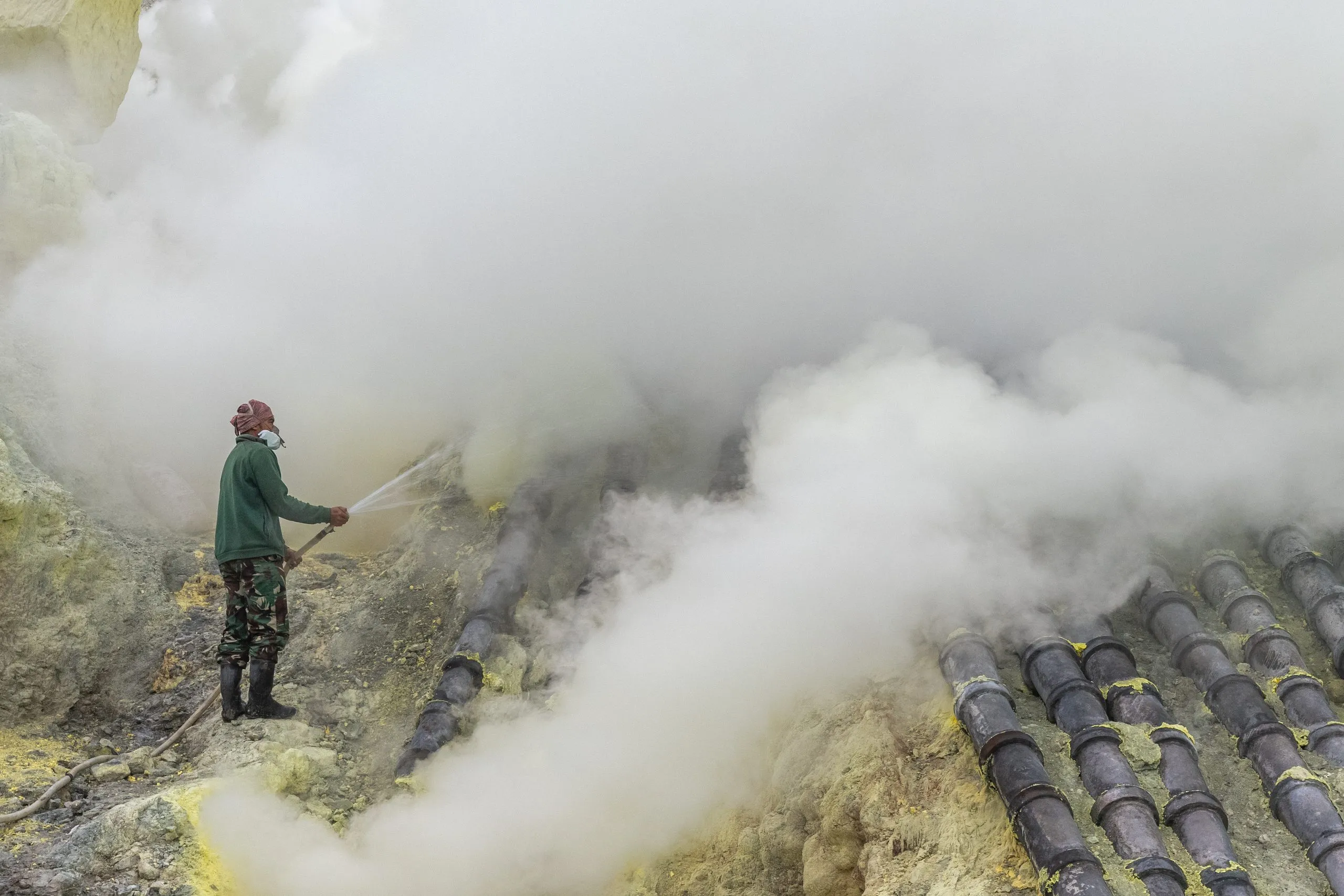
Cooling the pipes
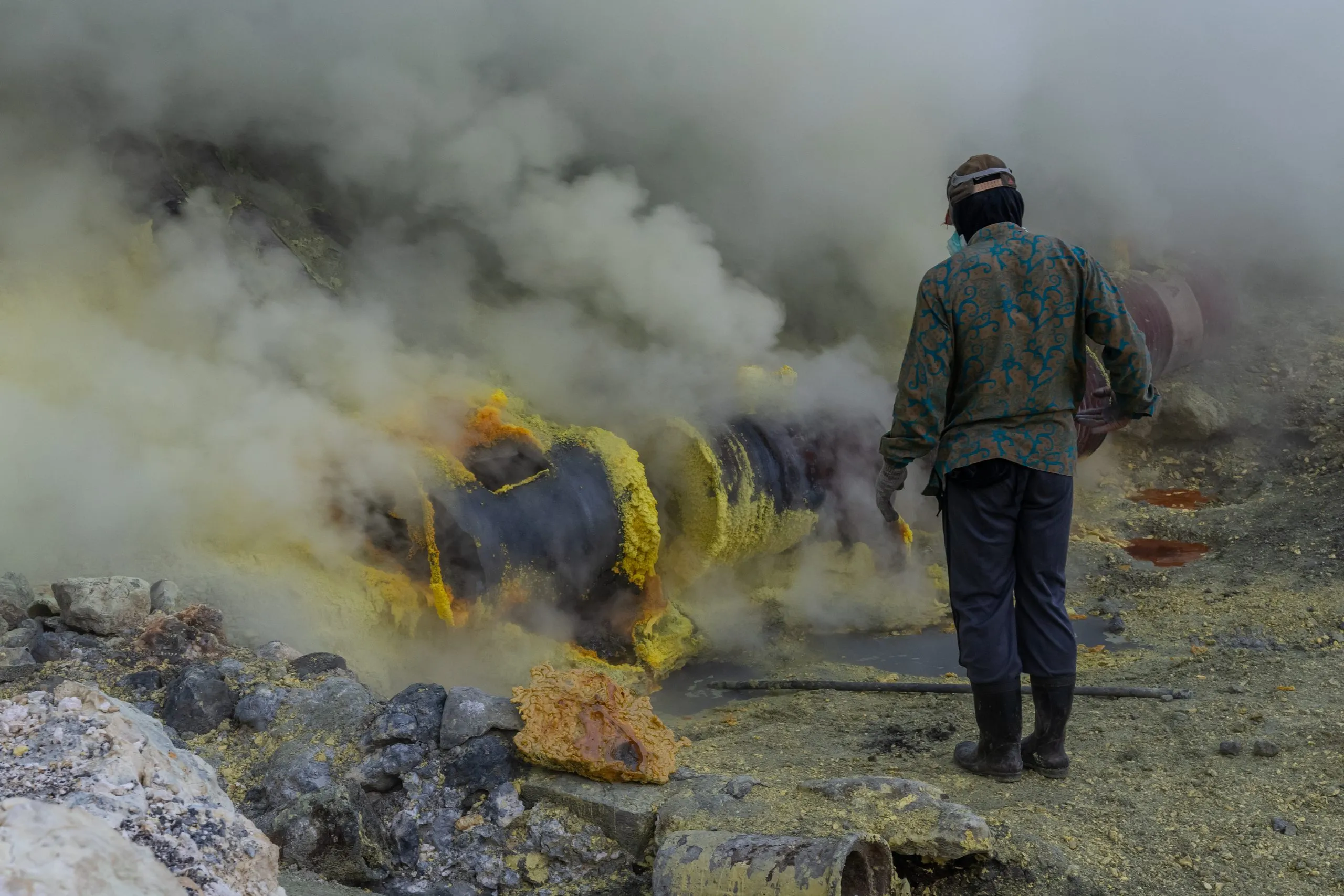
The kiln, caked in yellow
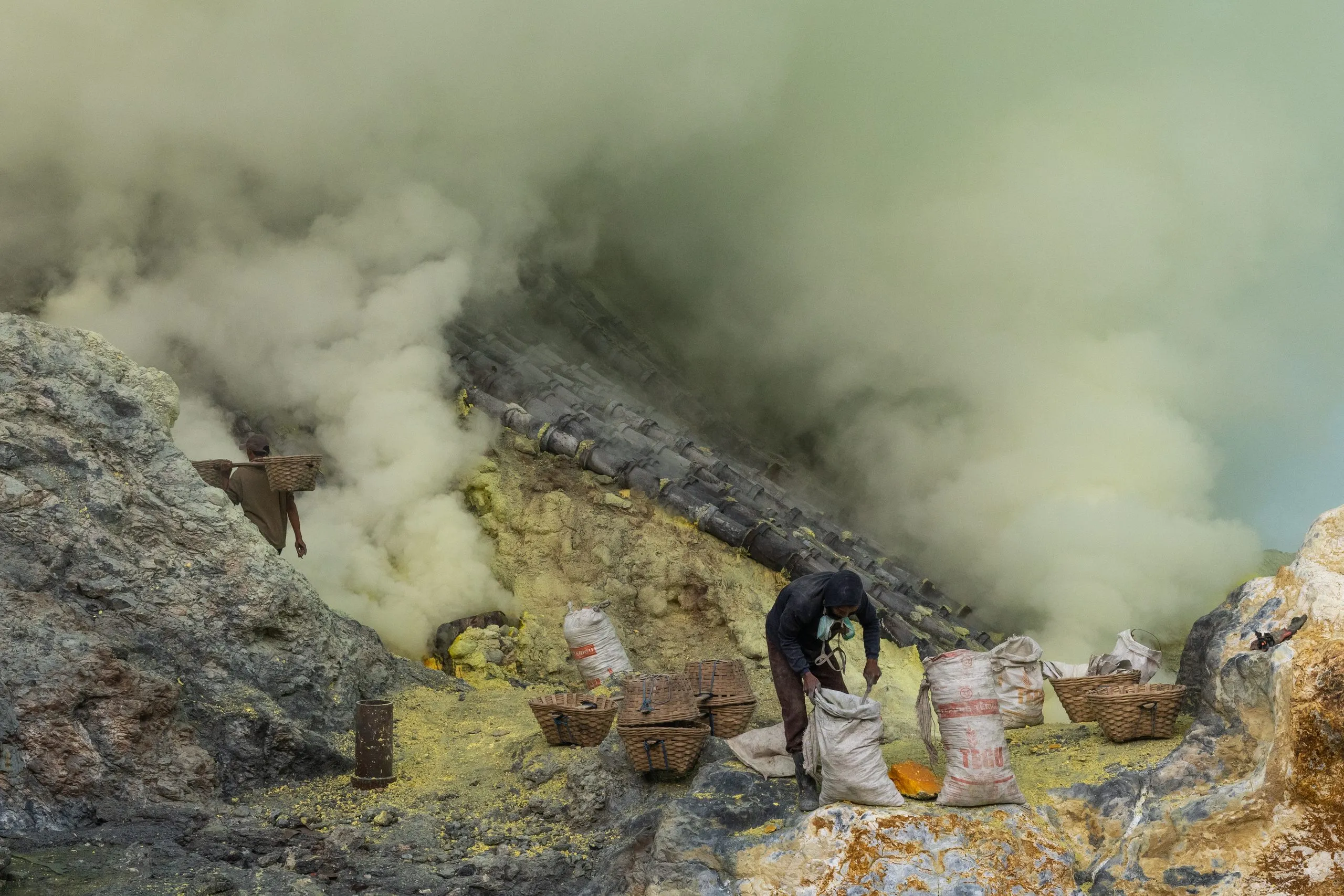
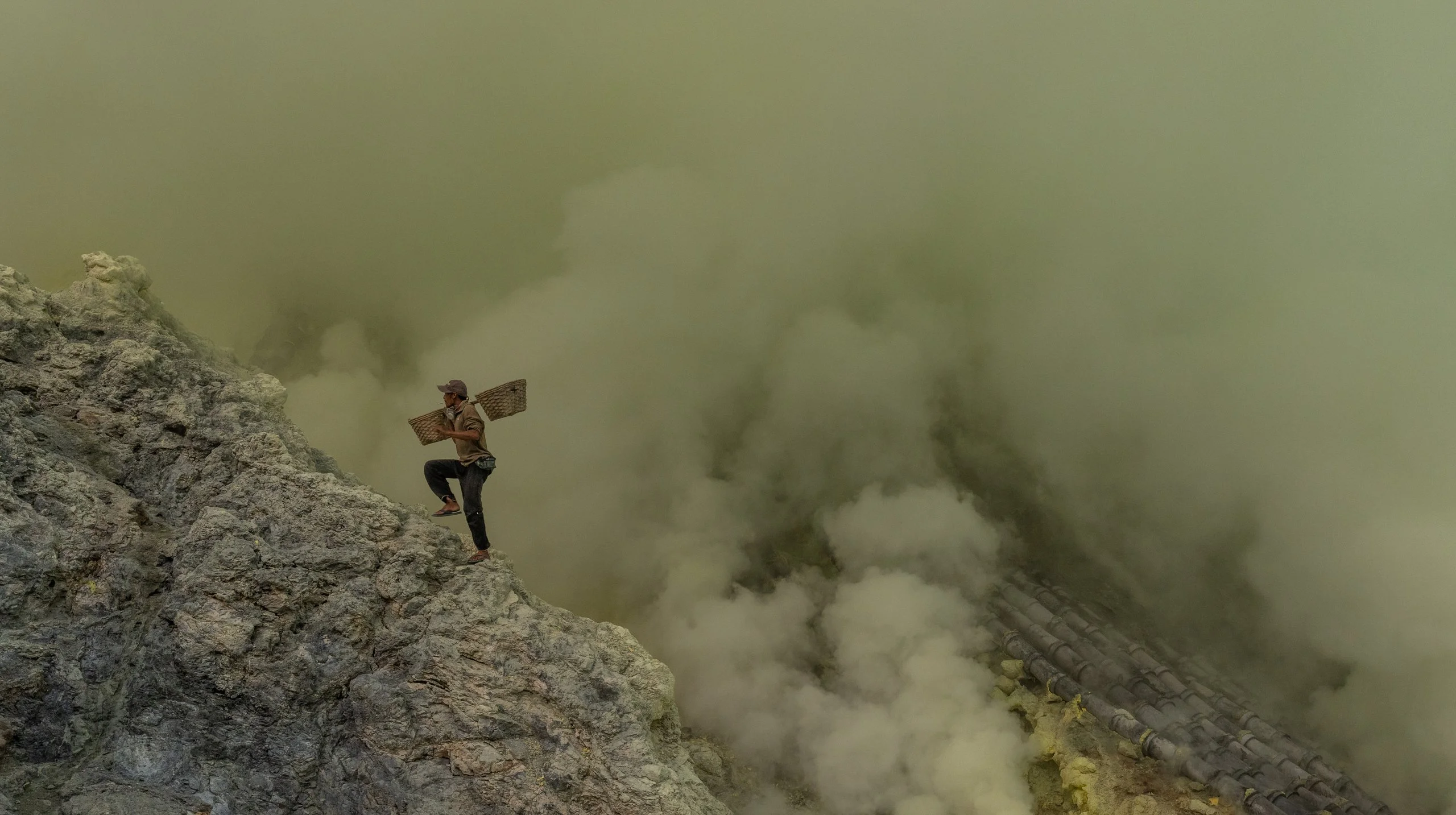
Seventy to ninety kilograms per load, twice a day
They call it devil’s gold. The yellow pays for school books and takes years of breath in return.
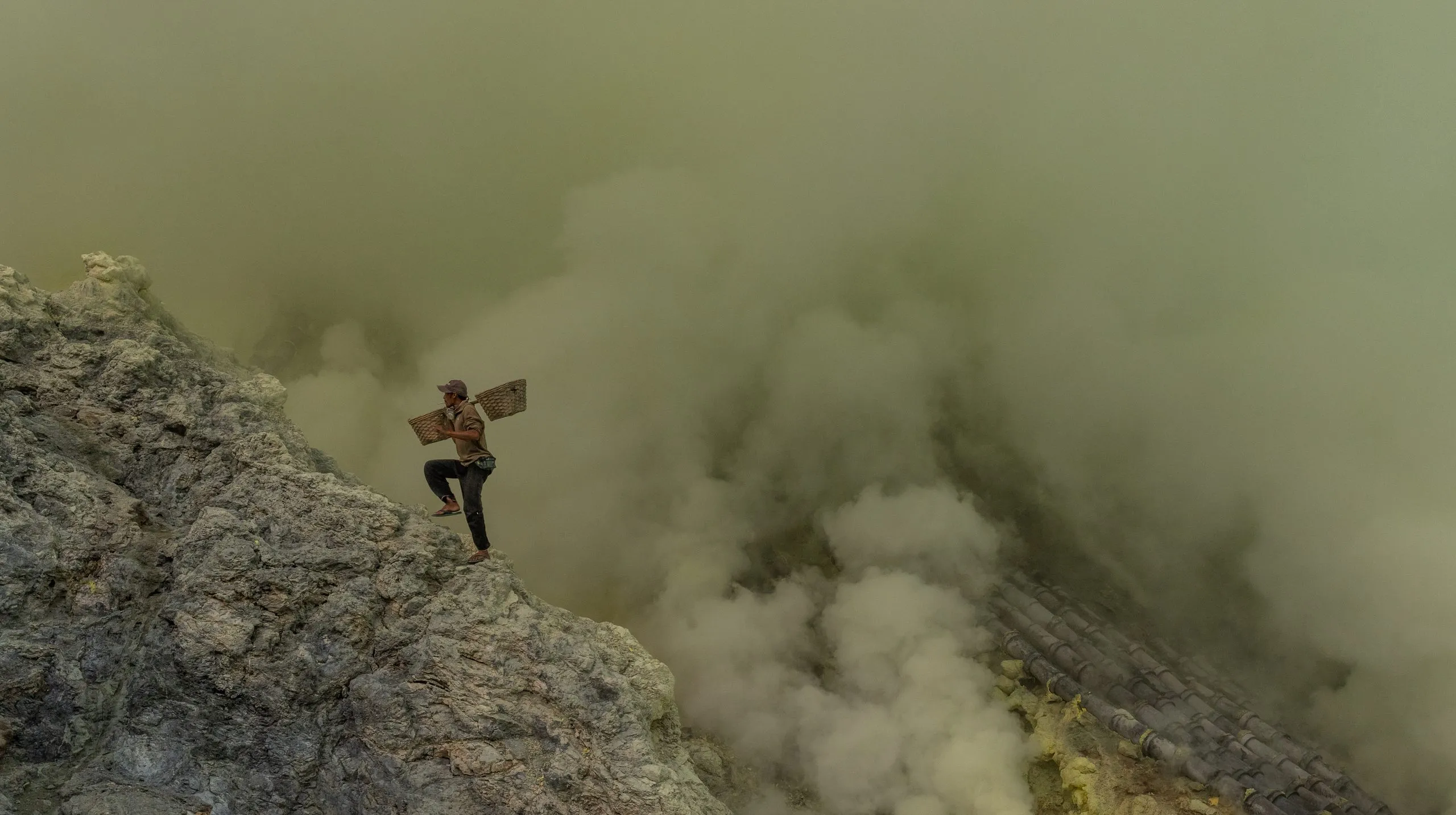
Out of the crater, the long carry begins
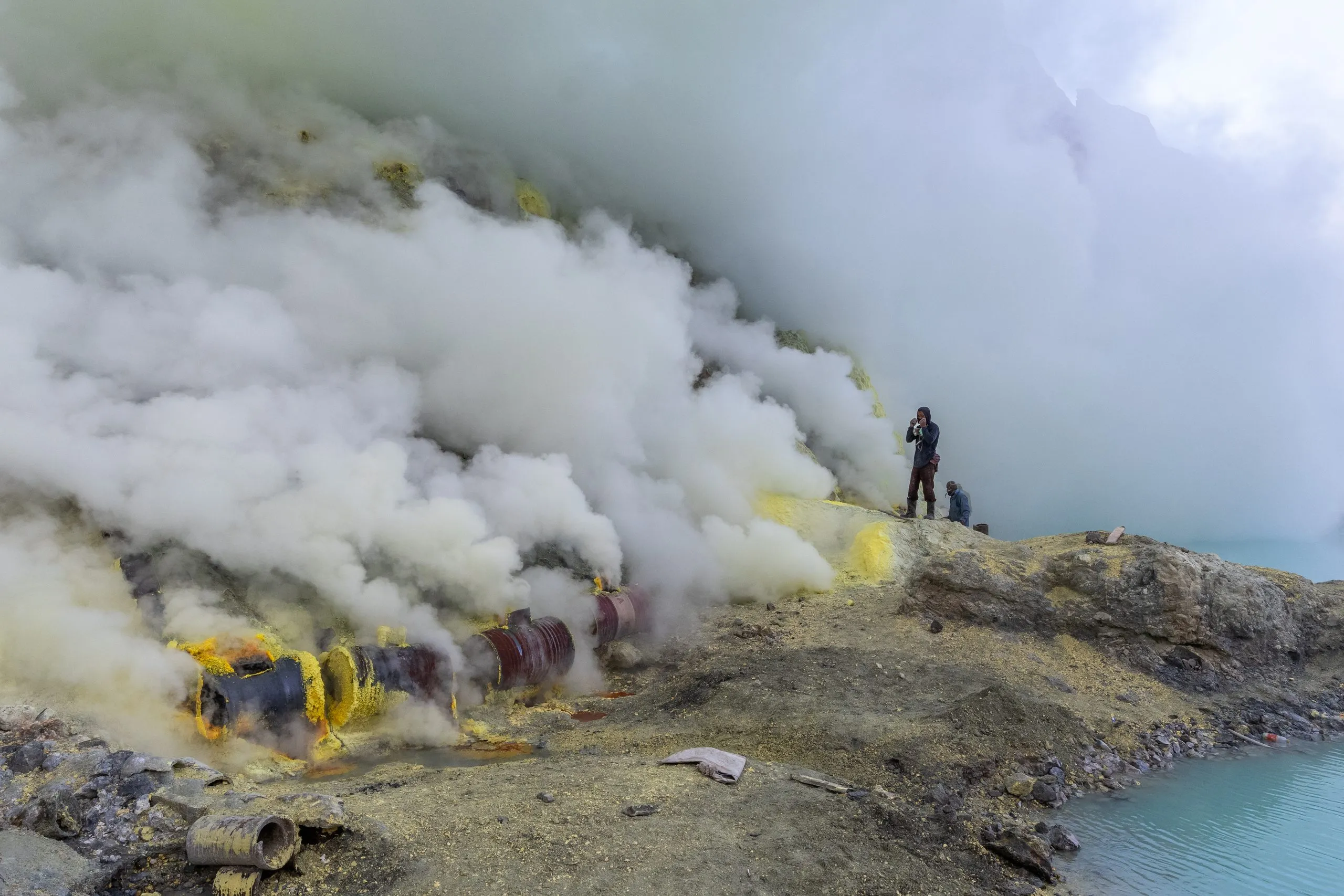
The crater at full breath
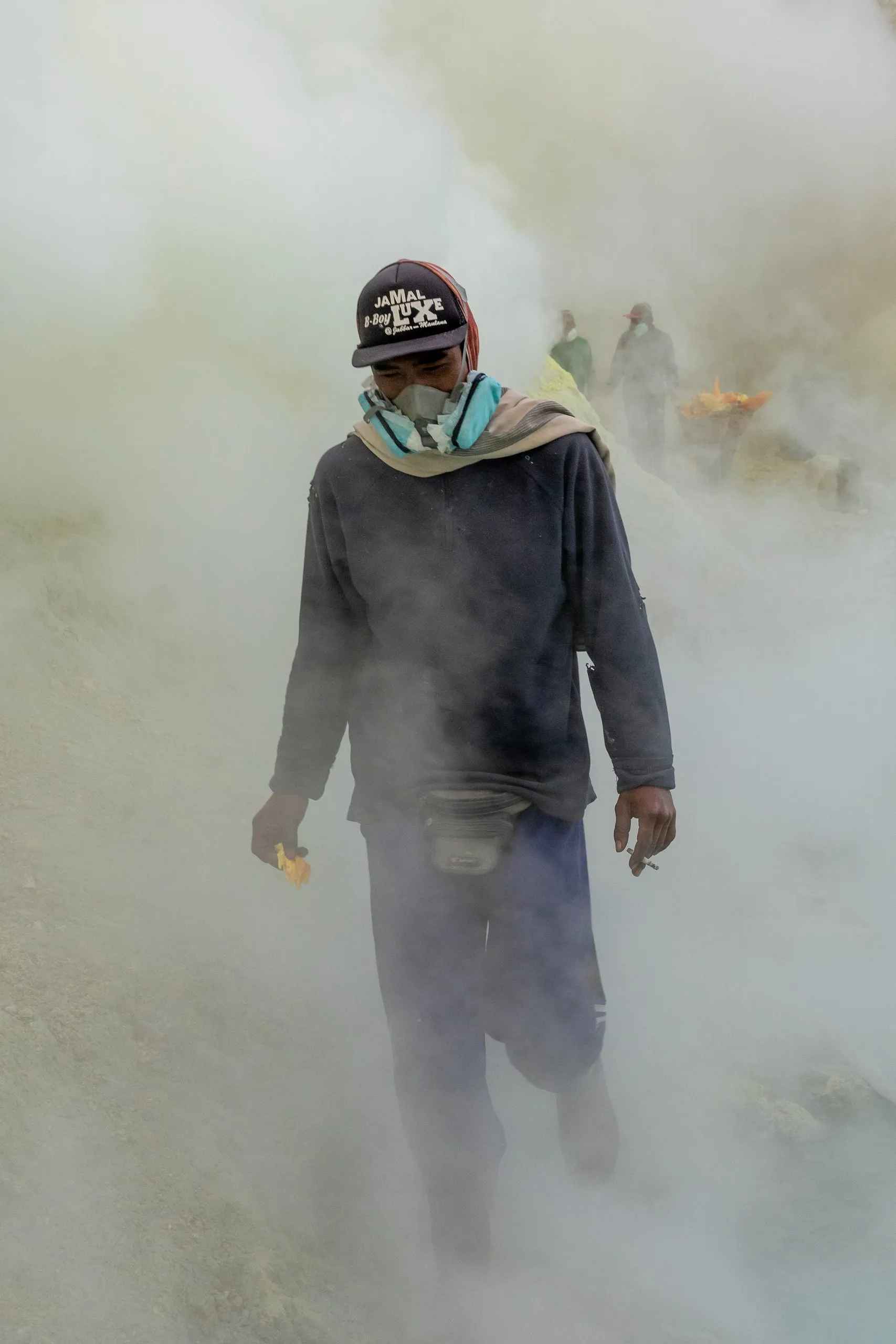
Through the white-out, back for the next load
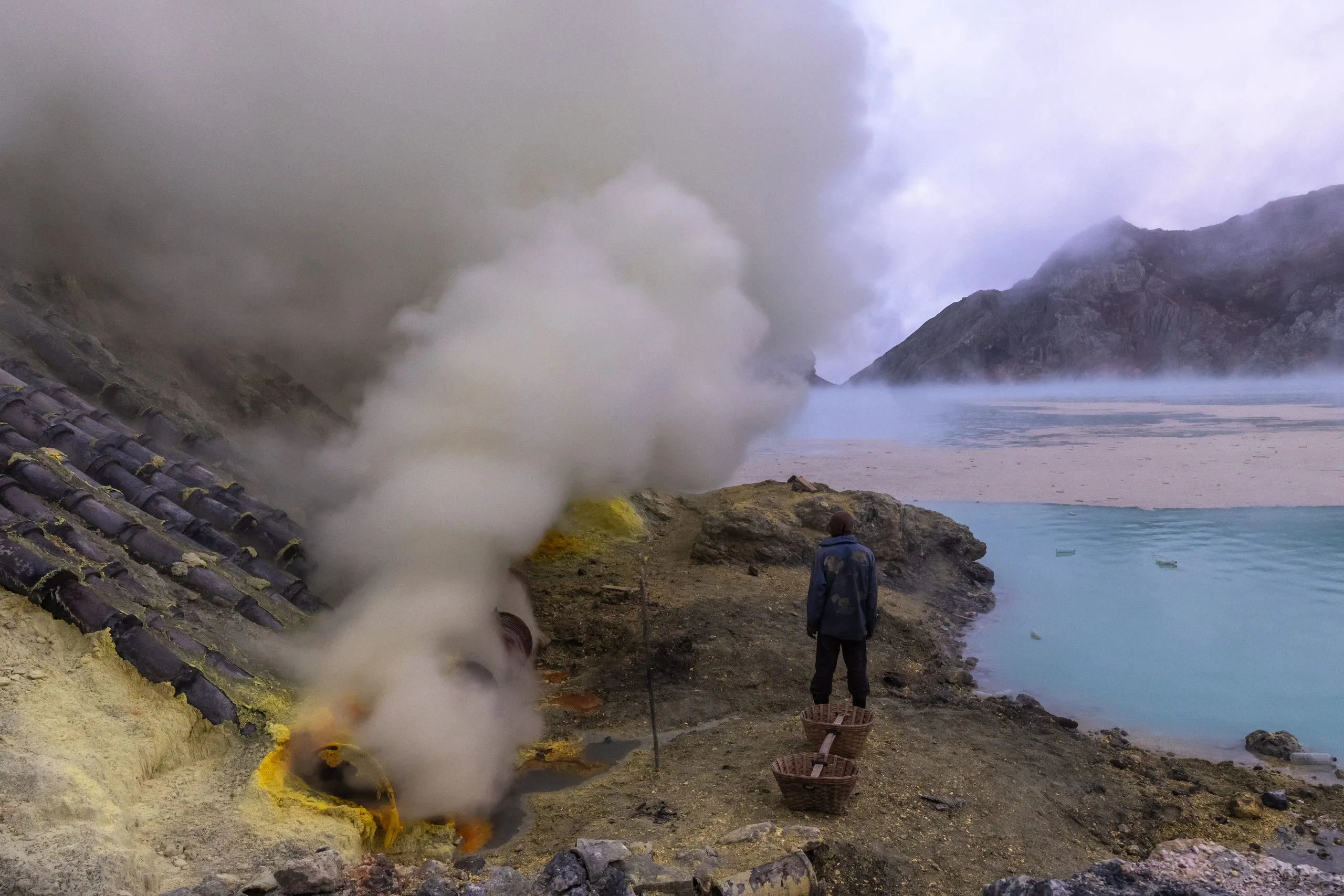
At the shore of the world’s largest acid lake, the air clears for a moment. The water is a pale, impossible turquoise. Beautiful and lethal at once. The miners rest here between loads and watch tourists photograph the same smoke they will carry an hour later.
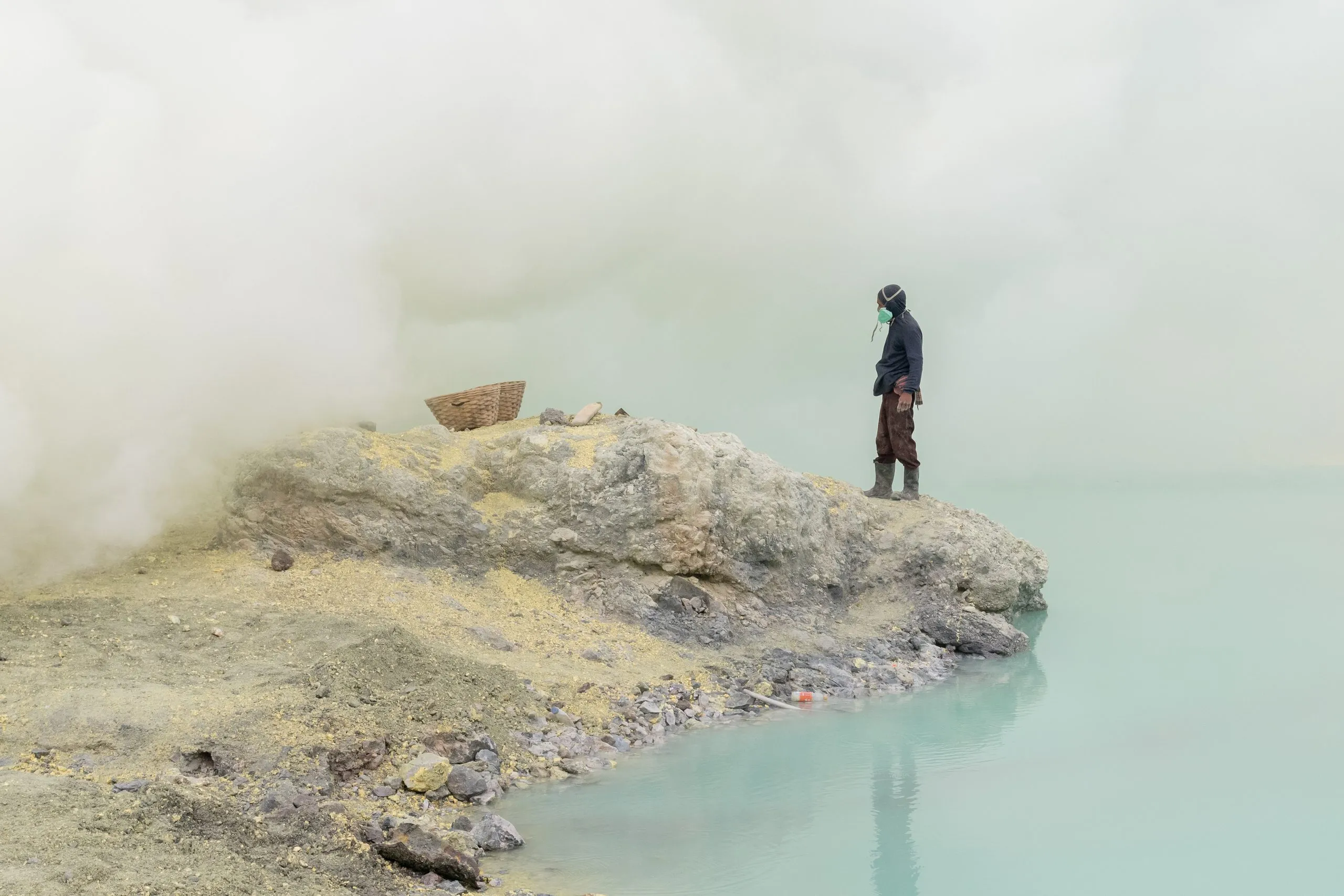
A pause above water with a pH close to zero
This story is about them. The men of Ijen, their humour, their arithmetic of kilograms and rupiah, and what it costs to carry a mountain out of itself.
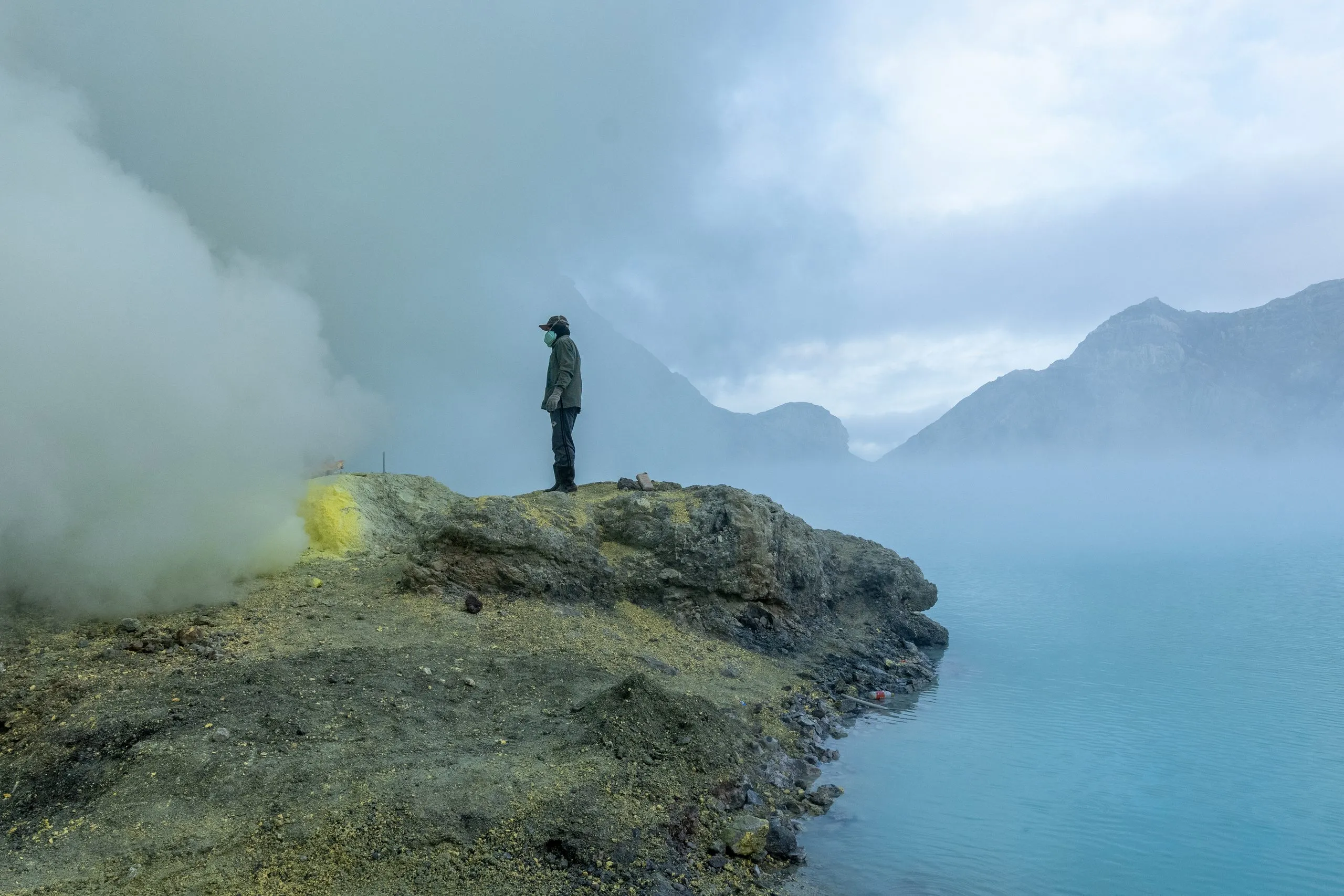
Evening over the crater lake